Live, virtual RCM training
RCM360TR Online Courses
A Revenue Cycle Management (RCM) training program taught live and virtually by the instructor, for learners who do better with real-time guidance.
Work through six lessons that make the healthcare revenue cycle easier to understand, one practical step at a time.
Access the CourseStart with the
whole cycle.
A practical overview of the people, steps, and decisions behind healthcare revenue.
Lesson 1 of 6
Introduction
Identify medical and billing principles
Describe revenue cycle management (RCM)
Compare patient access and patient registration representatives
Explain RCM benefits
Lesson 1 of 6
Revenue Cycle Management Overview
Review the revenue cycle workflow and the Four P's of Revenue Cycle Management.
In this lesson, you will review Revenue Cycle Management (RCM), the revenue cycle workflow, and the Four P's of Revenue Cycle Management.
RCM is the process through which healthcare organizations manage the financial aspects of patient care, from the initial appointment scheduling to the final payment for services rendered. It encompasses a series of steps that ensure healthcare providers are compensated for their services efficiently and accurately. When healthcare providers bill patients for their medical and clinical services, they are engaging in a process known as revenue cycle management — a vital component of the healthcare system, as it facilitates patient access to necessary care while ensuring that providers are compensated for their time and resources.
The Four P's of Revenue Cycle Management are included as a topic in this lesson.
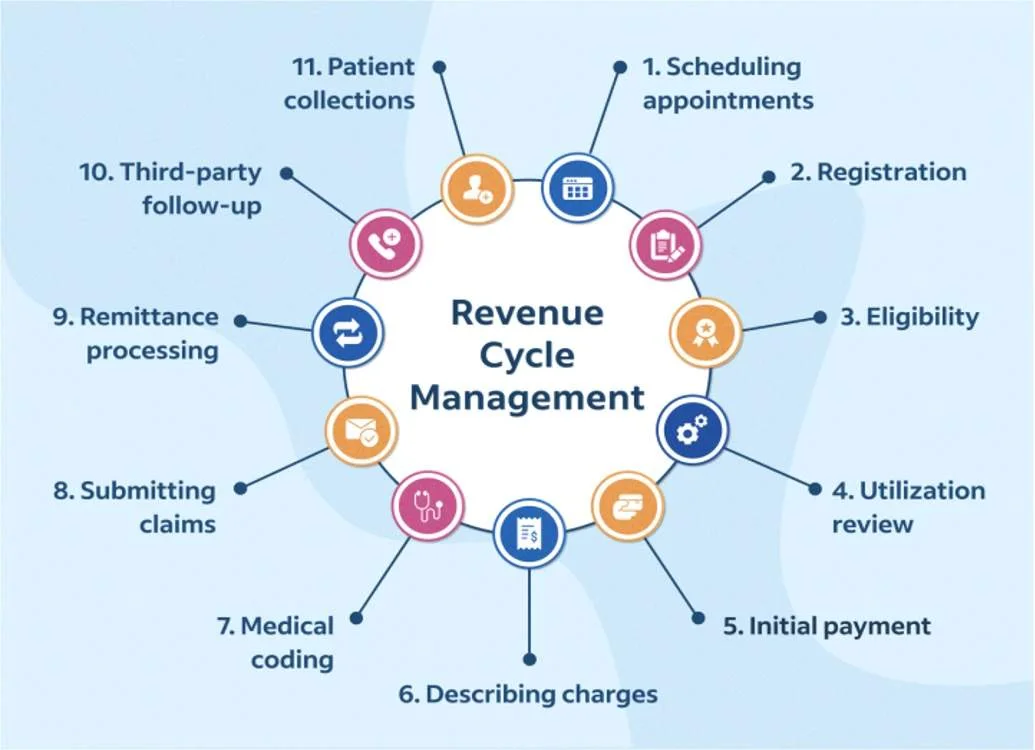
The workflow
From the first appointment to patient collections.
Use this visual guide as you learn how the revenue cycle moves through healthcare operations.
Your next step
Continue with RCM360TR.
Open the external Articulate course in a new tab when you are ready to continue learning.